Thursday, December 3, 2015

A Pastiche of Pushers


Recently, we’ve been playing more early war. While it’s been fun using the earlier fighters, I’ve grown weary of the same match ups of Eindeckers, Moraines and DH.2 from the available models. There were a number of early and mid-war planes used by the Allies that Wings of Glory does not yet support that I’d like to see on the table. I won’t get into a discussion of why that’s the case other than to say as an old school gamer, I’m in the camp of right rules for it and let me worry about finding a model.
In my last order with Shapeways, I chose to expand our gaming options by through the acquisition of several pusher planes. Though ultimately an unsuccessful design path, pushers served extensively during the war, in some theaters right up to the end. 

For the early war period, I selected the Vickers FB-5 ‘Gunbus’. Without a synchronizer, the Gunbus used the pusher design to give the gunner a wide field of fire to the front. Vulnerable to fire from the rear, slow and with poor maneuverability, the FB-5  was withdrawn from combat in 1916 when the Germans began fielding Halberstadt’s and Albatross biplane fighters.

The FB 5 on the left in the middle of the painting process.


Almost finished! Roundels from Dom's Decals. Number decals from Woodland Scenics.


The model has a magnetic ball bearing attached to the bottom which allows it to pivot on the top of the stand.


Here the plane is pitched up in a climb. The ball bearing is clearly visible on the bottom.


...And pushed over into a dive.This is about the limit of the pitch down. The support peg is hitting the landing gear struts. Decals on the tail are salvaged from an old Avro CF-105 model kit.


The stop gap solution to the new German fighters was another British pusher design – the Royal Aircraft Factory FE.2c. Similar to the FB-5 with a two man crew and pusher layout, the FE.2c was a larger aircraft that mounted an additional machinegun mounted on a pedestal giving the gunner the ability to shoot to the rear of the aircraft. To use the rear gun, the gunner would stand in/on the cockpit and shoot to the rear – seeing in done on the ground was one thing, but imagine doing this in air combat with the plane pitching about and you with no parachute! 

The Shapeways FE.2c in the final stages of decaling.


All based up and ready for gaming. Unlike the FB 5 this model has a flat magnet on the base which does not allow the model to be pitched about it's axis. Decal's are also from Dom's Decals and Woodland Scenics.  You can see a bit of graininess to the upper surface of the right lower wing. This is an effect of the White Strong and Flexible material. It's a bit exaggerated in this close up. At normal gaming distances, you don't notice it.

Rear quarter view of the FE.2c. The base is from Litko Game Accessories  


Rear view of the model on it's base. The playing mat is from the Nexus Wings of Glory product line.


Front port quarter view. The crew were printed in the cockpit as was the forward gun. The rear MG is not modeled. Decals from Dom's Decals and Woodland Scenics.
 The FE.2c served through Spring of 1917 being the main victim of the German fighters during “Bloody April”. They were soon superseded by the Sopwith Pup and Camel and relegated to Home Defense and training squadrons.


Last up and really more of a late war plane is the Savoia-Pomelio SP 3. A pusher design that was an Italian evolution of the French Farman pusher, the SP 3 retains  many of the features seen in the prior examples above. A two seat biplane pusher armed with a machinegun (or more rarely a 20mm cannon) the SP 3 was used extensively for reconnaissance and artillery observation well into 1918.

The SP-3 nears the end of painting. The tricolors on the vertical stabilizers had to be hand painted. I can't paint a straight line to save my life. You make do with what you have. The gunner and the MG were 'printed' as part of the model.


With most of the decals applied. Dom's Decals was the source of the roundels. The nice thing about Italian planes is they use half as many roundels as other countries because the bottom of the lower wing has the national colors painted across the entire surface. I'll look for a picture of it...


Quarterview showing off the struts of the tail booms.
 
 Like most other pushers it was slow with poor maneuverability, especially compared to the much more modern designs in use by 1918. In a perfect world, it would have been retired and replaced with Pomelio PD and PE two seater biplanes, but the disastrous retreat of the Twelfth Battle of the Isonzo (Better known as Caporetto) resulted in the loss of massive numbers of Italian aircraft. While the Italian RFC regrouped and re-equipped with the more modern designs, the SP3 was retained in service. It was not until summer of 1918 that the SP3 was replaced. 


It's 1918 and the SP3 has been caught out by this Phonix C.II (Another model from Shapesways to be covered in a future post)


The Phonix C.II gains position to the rear, unless the Haroit HD-1's join the fight, the SP3 is in serious trouble.  The C.II is on a base from the Aerodrome, while the SP3 is on a base from Litko Game Accessories.
 
These were all easy models to produce. The great thing about 3D printing is not having to fuss with assembling struts and booms – the whole model is assembled and ready for painting. All three were printed using White Strong and Flexible (WSF) material.
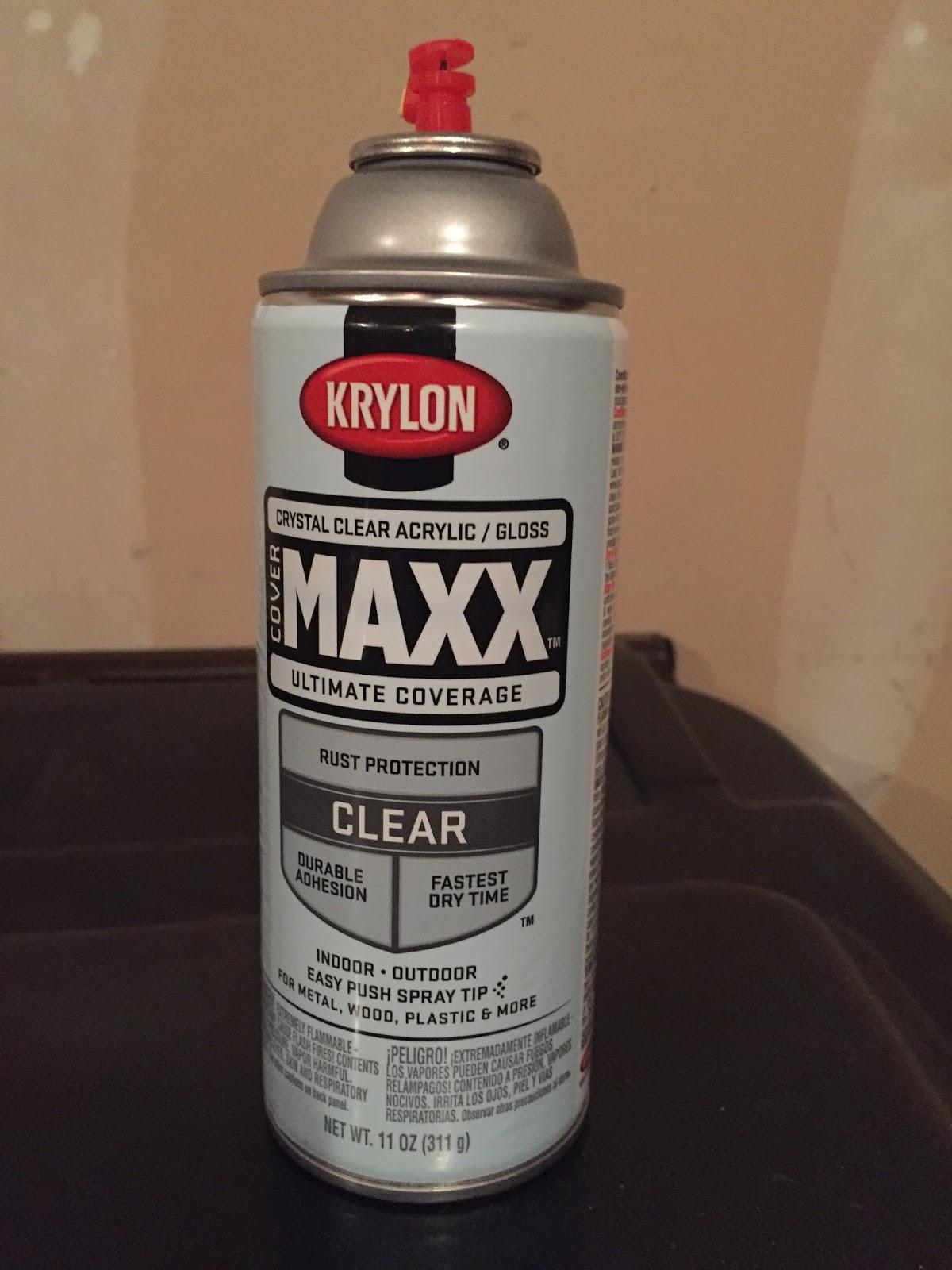
For painting, I’ve come to believe that the most important step is surface preparation. The porous, gritty nature of the WSF material can be corrected. I use diluted PVA glue for the first soaking to file the subsurface, but following that I used multiple light coats of gloss clear coat. 
 

It can take many repeated coats, but the results pay off in a smooth surface that takes primer and paint very well. 

The planes were painted with a mix of acrylic craft paints (Americana, Alene’s, etc.) and Vallejo paints. Camel was used for the wings on the FB5 and FE2. Vallejo Buff was used on the SP3 wings. Sky Gray is a great match for much of the gray skins and struts. Brown Violet is the stand in for the PC10 Olive Drab color and flat brown/cork brown.

Wednesday, December 2, 2015

1/144 German float planes - ready for action!

I'm almost done painting the plethora of float plane models for gaming with the Imperial German Navy Air Service. (Two holdouts which should be done in a week or two.)

Here is one of the Shapeways W12 models. This one (and the W29) were designed by colinwe.
The W 12 was painted a primer gray and then brush painted with Vallejo Sky Gray. The fun part was the three color naval camo pattern. No, I did not paint the camo patterrn. This is a decal produced by 1/144 Direct. This is an  excellent product. Easy to cut, easy to work with, adheres well.  

The model with the camo applied, but before adding the national insignia.

It takes a bit of time to cut the various pieces to fit, but it does pay off in the end.


Painting the W29 was esentially the same process, but with one fewer wing to worry about. The missing wing was more than made up for by the complex underwing struts. 

 The W.29 finish is a mix of the 1/144 Direct 3 color naval camo and the Reviresco W29 decal side panel with cross and number.

 Another plane on the table is the 1/144th Friedrichshafen FF49 two seater floatplane. I have two models - one got the three color naval lozenge pattern while the other got a very different two color camo pattern. While late-war, the pattern almost feels like something you would see 20-25 years later. These models took a bit more preperation as they were printed in White Strong and Flexible material. After an intial coat of PVA glue to fill sub surface pores, the application of multiple coats of clear acryllic gloss coat created a smooth surface the the paint and decals would work with.

In preparing the model two struts broke. They were replaced with brass rod.

 The FF49 was a 'large' biplane as cab seen in the below image where it is paired with a W12 (also not a small plane).


The FF49 on the left. Colors are sky gray and reflective green with cork brown floats.

The FF49 done up in three color naval lozenge camouflage. National markings are from 1/144 Direct.
Now the models are done, we're ready for some North Sea patrol engagements. The next images showcase the collection.

Three color lozenge rules! From front to back its -  FF49, W29, and a pair of W12. Bring on the Felixstowe!


The rest of the squadron, not as uniform in appearance. A pair of Brandenburg KDW with an AGO CII in front and a W12 making an appearance in the back.

The two FF 49 models showing the different paint schemes with the AGO CII in light blue and the KDW in the back.


Friday, May 22, 2015

The Shape(ways) of things to come: Infernal Machines ironclads from Black Army Productions

At the end of April 2015, Black Army Productions BAP unveiled their new line of 1:600 miniatures of warships of the American Civil War.  Those that know me and/or read  this blog know that I am a sucker for 1:600 warships - especially when the subjects are obscure models rarely produced by anyone else!

BAP has selected to produce this range using Shapeways 3D printing on demand services. You want one, you order it. Shapeways prints the design and ships it to you. No muss, no fuss. 3D printing is rapidly becoming the "shape of things to come" for miniatures production. The technology is rapidly advancing both in printer resolution and printing materials. This medium works well for certain aspects of the hobby. I'd ordered two 1/600 models last year from a different designer on Shapeways and was less than impressed with the 'stuccoclad' and USS Monitor.  

But as I say, this technology keeps rolling along. I perused the list of products available on the Infernal Machines storefront. The investment was not too steep, so I placed an order for two unique models not otherwise available - The Yazoo Monster and CSS Barataria. I took the BAP team's recommendation to order both models in Black, Strong and Flexible as they suggest it has a smoother texture than the standard White Smooth and Flexible (cost an addition $1.00 per model) The models arrived after several weeks - unusually slow for Shapeways, but it might speak to the demand for the BSF material and print runs. Regardless, it's not something BAP can control - the delay was all Shapeways.

So the models arrived on my doorstep. Opening the box, I found my two models. The Yazoo Monster lives up to it's name - It's a beast! One of the great things about 3D printing is that the model is a single piece. Hull, casemate, paddle wheels and stacks all one single piece. No assembly required! Try doing that with the conventional casting methods and see what happens!  Size wise, we are talking about a model in the same size range as CSS Nashville. It's similar construction as well, with a number of key differences. For instance - three smokestacks!

The Yazoo Monster (the black blob) lined with with Thoroughbred's USS Choctaw and Bay Area Yards USS Dunderberg gives you a good comparison of the relative size of the models.

Here The YM is in the middle with Dunderberg and the BAY CSS Missisippi model. 


The model is surprisingly smooth when printed in Black Strong and Flexible. It's a far superior medium than White Strong and Flexible and worth the extra dollar. Any of you that have worked with WSF and gaming models will appreciate the improvement that BSF offers.

This close up shows some of the surface detail (or lack thereof). My biggest worry was it would be a 'stuccoclad'. That turns out not to be the case - this should paint up nicely!

Bow aspect of the model. The forward gun ports are modeled, but lack any sign of the gun barrel or a shutter. Given the limited details available, I'm fine with the depiction on the model.

Okay - so this thing is tough to photograph in black!  Mea culpa!  But you get a sense of the size.


Now for the sticklers out there, the detail. I'd place this model on the continuum of being between Bay Area Yards and Peter Pig for detail and quality. The model has decent game table details - pilot house windows and gun ports are cleanly modeled. The deck and armor do not reflect the engraved detail you get from Thoroughbred or Bay Area Yards. But you know what? That's okay. This model should paint up very nicely.

The second model is CSS Barataria. This is another obscure ship that is not available in 1/600. It's so obscure that little information is readily available regarding this ship. It apparently carried some form of armor over the boilers and mounted a gun. A stern wheeler, she was captured by the US Navy and served as a Union ship for the remainder of the war.

CSS Barataria

A one piece model, the stacks are a little fragile, but the wheel was already assembled!

The model has a very narrow beam. It's comparable to the beam on a Thoroughbred blockade runner model.  The wheel looks like it would be better suited on a mill pond than a river boat. The model is small - about the size of a Thoroughbred tug boat  or the BAY Naugatuck models.For a model this small, it's maybe a tiny bit pricey, but you are getting a unique model available from now one else.

Bigger than a tug, but smaller than USS Fuschia from Peter Pig.

Here is Barataria next to a Thoroughbred blockade runner for comparison.
My verdict: Good solid gaming pieces! I'm happy to use both on my gaming table with the rest of the collection. The detail is not at the high end work done by Thoroughbred or Bay Area Yards, but I'd class it as a "show" in the classic "Win-Place-Show" ranking of a horse race. I'll be keeping my eyes on these guys in the future! 

Sunday, November 9, 2014

Progress on the WWI front...with Floatplanes!

Our recent group mega-order from Shapeways arrived and with it the fun. I've got a lot of work lined up for the winter. For a quick start, I primed two models that were ready for priming. These are two German Imperial Naval Air Service planes - the W12 two seat fighter and the W29 late war two seat monoplane.

The W12 is in the foreground with the W29 behind.

These models are printed in the Fine Ultra Detail (FUD) material. It's basically a smooth plastic resin that provides great details. The only downside is that it's not as durable (i.e. game table friendly) as the White Strong Flexible (WSF) in which I get most of my models printed.

 
You can see the detail on the wing ribs, the engine exhaust and struts. 


The model has the Wings of Glory flight peg cast to the bottom of the model - that's a plus.

The W12 next to it's predecessor the KDW.  North Seas gaming anyone?


Wonderful detailed model. The only assembly required was to attach the propeller.


Monday, October 20, 2014

1/600 ACW ship models from Shapeways.

I recently stumbled across a designer on Shapeways that made 3D models of ACW ships available. Shapeways, for those that do not know is a 3D printing company. Their printers can lay down a model one layer at a time. The finished product is a one piece model with no (or is some cases a little) assembly required.

Brown Water Navy Miniatures produces several models in 1/600. I ordered two of them - USS Monitor and CSS Baltic. I've been using 1/144 model planes from Shapeways for the past year, but this was the first time I'd found ACW ship models.

The models are durable. If you are familiar with the "White Strong and Flexible" material used by Shapeways, you know that it's a porous, tough material. It's a staple for the 1/144 airplanes and is a great material for table top miniatures - light and tough. The downside is that it's porous. To get a smooth surface for painting, you need to do a bit of prep work filling and smoothing the surface. But hey - it's a relatively cheap model ($6.00 for USS Monitor).

The USS Monitor is well sculpted with easily recognizable details. I've built several 1/600 kits of the Monitor, as a result, I feel comfortable reviewing this model.  Let's start with the basics, for a 1/600 model, it's a little on the small side. Checking Silverstone's Civil War Navies, we find the Monitor should have a length of 179 feet and a width of 41.5 feet. In 1/600, we're looking for 3.58" long by 0.83" wide. The model is 3" by 0.77" which by my numbers is 84% long and 93% skinny compared to the expected result. So...it's a little small.


The model sports a mix of features that don't cleanly mesh. The pilot house is the post-Hampton Roads refit with the improved angled armor.


But the smokestacks are clearly the pre-Hampton Roads square boxes designed to be removed before action. Post-Hampton Roads these two exhausts are routed into a common funnel.


Here we are side by side with a Peter Pig monitor casting. The SWF 3D model does not have the same level of detail as the pewter cast Peter Pig model. The anchor well and forward hatch are missing, but the rear ventilators and aft hatch are present on the Shapeways model.


Okay...this is just a bad picture. (my bad.) You can see the armored ledge around the top of the turret and sort of see the sloped armor of the pilot house.


CSS Baltic has similar issues at 83% of expected length, but 101% of width.


Bow view of Brown Water Navies CSS Baltic.

CSS Baltic. This view shows off the 'grainy' surface of the WSF material. With a bit of work and a top seal coat, you can get a smooth finish. You don't get the surface detail  or Thoroughbred or BAY, but it's recognizable as CSS Baltic.

The wheelhouses are inline with the hull. Since there is no photographic evidence to the contrary...okay. It's similar to many of the Peter Pig models. It lacks the detail parts you'd get with Thoroughbred.


Not bad models, definitely game table pieces...but tough, durable game table pieces. If I was running a game for kids - this is the way to go. They'd be hard pressed to break anything. But if you are closer to the scale modeling end, you'll want to stick to the Bay Area Yards and Thoroughbred Miniatures stuff. 

I'll likely order some more models from Brown Water Navy Miniatures in the future. There are some interesting odds and ends that look like they scale out closer to true 1/600. Keep your eye on this guy - Brown Water Navy Miniatures and Shapeways could become another player in the 1/600 ACW space. 
resin that is really tough. It takes a bit of prep work, but it pays off in the painting.

Monday, October 6, 2014

Puttering about with the ACW models

I've been puttering with the 1/600 ACW ship models. Did some detailing on Union Casco class "torpedo boats" as well as work on some other models. Below are a few pictures of what's going on on the workbench. It's mostly slow work.

The big accomplishment was getting the primer coat on a couple of models. I'd had trouble getting Gesso to adhere to some of the the resin that Bay Area Yards used. I gave the models a couple of baths in warm soapy water and even tried CRC contact cleaner (don't try this at home kids!) to cut through the mold release agent.

Fortunately, with the recent spell of warm, dry weather, I could go to the old reliable method of using $1.50 a can gray spray paint from Wally World as a primer coat. I had no trouble getting the primer coat to stick to the models. 

Bay Area Yards CSS Texas with a primer coat applied.


CSS Texas is a new model in the Bay Area Yards lineup. The model seems to crouch on the table with the severely sloped casemate. I've got the model based and should be able to get this finished quickly.

Bay Area Yards timberclad USS Lexington.


I had a little trouble with the stacks on the Lexington. Sometimes, I'm my own worst enemy. One of the stacks was out of true, so I tried to bend it...and snapped it off right at deck level. I was able to reattach it, but the stacks are a bit out of true and look a little goofy. We'll see how it looks later with a coat of paint.


The timberclad in front of the Thoroughbred Figures model of USS Tyler.


I do like the variety in models we can access these days. Way, way back in the past, we were lucky to have one model of a timberclad from Peter Pig...now you can get detailed models of the Tyler, Lexington and Conestoga from multiple manufacturers.

Union Ellet ram Lioness from Bay Area Yards

Last up - an Ellet Ram. Ever since reading Chester Hearn's book on the Ellet Brigade, I've been hooked on the whole concept of the rams on the Mississippi River. Fortunately, I was able to add the sternwheel ram Lioness to my collection before it dropped out of production. I like Lioness because this is a rare model of a sternwheeler and makes a great addition to your model fleets of sidewheel rams from Thoroughbred and Peter Pig. I'm not quite done with this model. It needs another top coat, then some weathering and finally a little touch up on the base. Should be able to join the fleet by November!